Tuesday, October 12, 2021

Greenhouses Grow in Demand as Gardening Takes Off


As more homeowners sheltered during the pandemic, they explored outside activities, with gardening growing into a favorite pastime for many. To grow gardeners’ newfound love for plants and gardens, greenhouses are popping up in more backyards.


Greenhouse manufacturers are reporting surging website traffic and demand over the past year.


Bunny Williams, who maintains an interior design practice in Manhattan, told The Wall Street Journal that the greenhouse has become a place of solace for her and her husband during the pandemic. They use their greenhouse to care for a variety of plants, such as orchids, succulents, passion flowers, and geraniums.


The greenhouses can be as elaborate as homeowners desire, from luxurious 25-by-50-foot metal-framed glass enclosures costing thousands of dollars to pop-up units of a few hundred dollars that homeowners purchase online.


But greenhouses are bringing their users more purpose than just plantings. They also double as places to entertain or even to work from.


“Greenhouses have a different smell, temperature, light, and humidity than that of being outside,” Kathryn Herman, a landscape designer who built a greenhouse on her property in Fairfield, Conn., told The Wall Street Journal. Herman spent about $324,000 to build her home’s greenhouse. “When you step into one, you are in a totally different environment, which makes them magical.”


Source: “Backyard Greenhouses Are Growing on Homeowners,” The Wall Street Journal


Monday, October 11, 2021

First-Time Buyers: Don’t Blow the Budget


Over the last few months, high competition and the limited housing stock for sale have brought double-digit annual gains to home prices. That has locked out many buyers, particularly first-time home buyers, or forced them to stretch their budgets to the maximum.


Amid those dynamics, the median price of an existing home reached $356,700 in August—a nearly 15% uptick compared to a year earlier, according to the National Association of REALTORS®.


Lately, more inventory is coming onto the market, but first-time buyers are still struggling to afford today’s higher home prices and the costs of homeownership.


First-time buyers comprised 29% of sales in August—they usually make up about 40% of the housing market, according to NAR.


In general, buyers are typically in good financial shape. But many first-time buyers in particular have to keep their eyes on their budget to afford homeownership. Overextending themselves can lead to regret and financial hardship later on. Nearly two-thirds—or 64%—of millennials, aged 25 to 40, say they have at least one regret about purchasing their current home, according to a Bankrate poll from earlier this year. The top regrets are that maintenance, mortgage, and other costs are too high. Thirteen percent believe they overpaid for their property.


To feel more prepared, creating a budget and considering all the costs of homeownership are essential, financial experts say.


The typical first-time home buyer makes a 7% down payment, on average, on a home purchase, according to NAR data. But some loan offerings may allow them to put down much less, like 3% or 3.5%, or even 0% with loans through the Department of Veterans Affairs, for those who are eligible.


After calculating the down payment, first-time buyers should factor in expenses like property taxes, homeowners insurance (which averages about $1,000 a year but can vary greatly), association fees, utilities, and maintenance costs.


“Something may break once you are in the home or you may want to decorate it or change the finishes within the home,” Jessica Lautz, NAR’s vice president of demographics and behavioral insights, told CNBC.


About 23% of buyers waived inspections in August, according to NAR, but that can lead to unexpected, expensive repairs. “That is the biggest budget buster to me,” Jacqueline Cooper, president and CEO of Financial Education Associates in Dorchester, Mass., told CNBC. “These are things we don’t notice and we don’t have the experience to determine if this is an OK thing or not.”


Another big expense buyers need to prepare for is closing costs. Those include costs like the appraisal, title insurance, credit reports, loan origination fees, and more that first-time home buyers ought to brace for. They can add up to between 2% to 5% of the home price and are due at closing.


Source: “How Much House Can You Afford? Here’s What First-Time Homebuyers Need to Know,” CNBC (Oct. 6, 2021)


Thursday, October 7, 2021

What Homeowners Should Know About Solar Panels


Increasing energy costs are spurring more homeowners to go solar, but an abundance of choices in the field can make the decision daunting. Help homeowners weigh the options with these five considerations.


Installing solar panels or modules to convert sunlight into electricity and conserve energy is not a new concept. Back in 1954, researchers at Bell Laboratories demonstrated the first practical silicon solar cell.


But solar power has been heating up over the last 10 years, with a 50% average annual growth rate in the U.S., according to the Solar Energy Industries Association. This is due, in part, to the Solar Investment Tax Credit put in place in 2006 that now reimburses 26% of the cost for solar systems on residential and commercial properties. Other factors have also played a role, including low interest rates. Homeowners can bundle the cost of panels into their mortgage, says Amy Tovel, marketing manager of Ichijo USA, a company that installs modules on many Pacific Northwest homes.


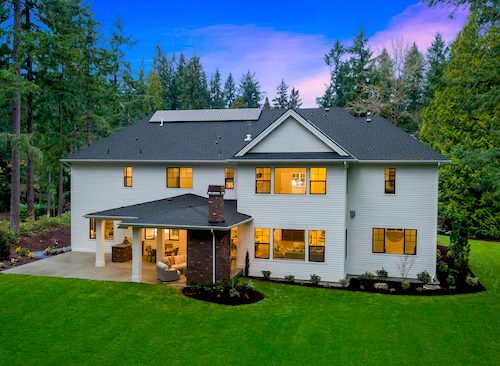
Home with solar panels


Many homeowners are becoming more energy conscious, says architect Nathan Kipnis, FAIA, LEED AP, whose Kipnis Architecture + Planning offices are in Chicago and Boulder, Colo. It’s rare for one of his company’s major projects not to include solar panels or wiring for installation later, largely because of increasing efficiency, he says.


Still another reason is that more areas are enacting mandates. California regulators recently voted to require builders to include solar power and battery storage in new commercial and high-rise residential projects, as of Jan. 1, 2023. The state of Washington now requires new homes to have energy credits, as of Feb. 1, 2021, and solar panels represent one option to attain them. Homes greater than 5,000 square feet require additional credit. To meet those criteria, MN Custom Homes doubles the amount of solar panels for its larger homes, says vice president Ben Brittingham.


Lastly, the panels have become less of an eyesore due to improved aesthetics, whether on a roof or in a yard stationed on the ground—sometimes preferred due to the absence of trees—says Suvi Sharma, founder and director of Solaria Corp., a Fremont, Calif.-based solar manufacturer focused on the residential market.


But as the field grows crowded with manufacturers and installers touting longer-lasting solar systems with greater efficiency and less cost, deciding which one to choose requires research.


“The promises some companies make are wildly flowing,” cautions Madison, Conn.-based architect Duo Dickinson. Another caveat is the cost fluctuation of panels due to tariffs on imports, now at 18%. Though these are set to expire next February, China remains a top location for manufacturers.


But home buyers seeking a new home may not have to make choices as more developers and builders incorporate solar during construction.


That’s the case with Pearl Homes’ new community, Hunters Point, in Cortez, Fla. Owner Marshall Gobuty wanted to construct the first NetZero LEED certified community in the U.S. “Anybody can build a house but not everybody can reduce the carbon footprint,” Gobuty says, adding, “Our goal is to build homes that generate more power than they consume.”


Hunters Point home rendering


When completed by early 2022, all 86 homes, averaging 3,300 square feet, will have roof panels, WaterSense plumbing and fixtures, and GE EnergyStar appliances. Though the company is still deciding which panels to use, they are going with installer my-RESI out of Millstone Township, N.J., and sonnen’s ecoLinx energy storage system, which Gobuty believes offers the most efficient, safest battery, and a 25-year warranty. Homeowners will pay a fixed fee to the HOA for a set amount of power and backup.


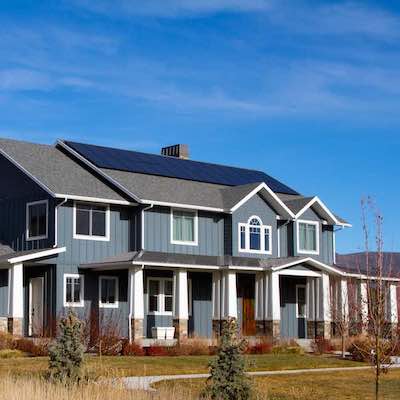
Utah home with solar panels


But homeowners should be aware that having solar power doesn’t eliminate an electric bill since there’s still a fee to be connected to the grid, says James O’Connor, director of marketing for Salt Lake City-based installer, Go Solar Group.


Here’s what home buyers who are working with a builder or architect on a new home—or retrofitting an existing home—should consider when choosing components from various providers to make solar work.


1. Roof and house orientation. How much surface solar modules cover on a roof or how big the installation is on the ground makes a difference in the amount of energy produced. Generally, they are placed facing south or west to be exposed to the most sunlight, optimizing power, says Dickinson. Pearl Homes’ will cover 88% to 92% of a roof surface. Covering 100% may produce more power than occupants can use.


2. Panels. In recent years, panels have become more efficient, thinner, and better looking, thanks to monocrystalline designs that use a single photovoltaic cell rather than several cells that the older polycrystalline designs relied on. As a result, the updated panels can occupy less roof space because they pack in more power, O’Connor says.


The number of panels installed is generally based on the amount of electricity occupants use, which is why an installer often asks for 12 months of electric bills, says Mike Koehler, vice president and solar business developer for Gardner Capital, St. Louis. If the next owner of a solar powered house uses more electricity, they might request a larger array, he says.


What this means for a homeowner who chooses a newer 400W panel, for example, versus older 370W panel, is that they may only need to install 38 panels instead of 41 and save about 33 square feet of roof space, Koehler says. And because the 400W panel is more efficient, it will generate more electricity, he says.


Installers also need to know local ordinances. For example, Evanston, Ill., doesn’t allow panels to stick up past a roof’s ridge line or be visible from the street if the roof is flat, says Kipnis. They also need to know local utility rules since some will buy back excess power, Koehler says. Rocky Mountain Power, which services most Utah customers, gives credit for excess energy, says Scott Cramer, president of Go Solar Group.


3. Batteries. Extra energy can be stored in batteries. Different solar panel manufacturers prefer different battery companies. For example, Solaria buys batteries from Sonnen, Sharma says.


4. Installers. Installation costs have dropped as more installers have entered the niche and become more experienced, says O’Connor. Besides the modules and batteries, homeowners who go solar need an inverter to hold panels, wiring in place, and a meter. Sharma suggests homeowners ask installers which modules they use, the price of each panel, number needed, what they look like, how much shipping to the site will be, and if permits are needed.


5. Costs and return on investment. A typical panel system might run between $15,000 and $25,000, which includes ancillary equipment and labor, Koehler says. Yearly savings vary greatly depending on the utility and if it offers incentives, he says. The good news is that a typical warranty lasts a long time; Solaria’s is 25 years, Sharma says.


How much money is saved also depends on how a purchase is made. “If someone pays out of pocket, it may take seven to 10 years for a payback, but if someone leases the system, the savings will be less per month, but the homeowner has no upfront investment,” Koehler says.


One caveat relates to whether a solar system will increase a home’s value. One study from the U.S. Department of Energy’s Lawrence Berkeley National Laboratory found that the panels are viewed as upgrades and home buyers have been willing to pay a premium of about $15,000 for an average-sized solar system. Additionally, the homes sell faster than those without solar.


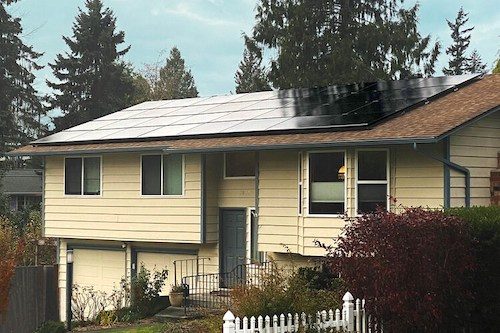
Yellow house with solar panels


Brittingham of MN Custom Homes thinks that the ethical rather than financial reasons are becoming a bigger buyer incentive. “A return on investment is still longer term since there are still big out-of-pocket expenses,” he says.


Another caveat is that not all homeowners benefit equally from having a solar system. Those who live in a house with a lot of trees that block sunlight will see less benefit, as will those who already use little electricity or have inexpensive electricity.


Questions to Ask


To help your clients make the best decision, share these questions for vetting solar companies.


  • Is my roof designed so it can accept panels?

  • Does it face the right direction for optimal efficiency?

  • How much of the roof surface needs to be covered, or how many panels are needed?

  • Is the roof in good shape for panel installation or should it first be replaced?

  • Does my community have restrictions about aesthetics, such as not allowing panels on a house in an historic district or visible from the street?

  • What are the pros and cons of leasing or buying panels?

  • How long has your company been in business and how many installations do you regularly do? What accreditations do you have? Are you NABCEP (North American Board of Certified Energy Practitioners) certified?

  • If we’re not ready to install solar yet, is it worthwhile to prewire to save on costs later?

  • What warranties do you offer and for how long?

  • What, if any, snafus can happen when going solar?


Barbara BallingerBarbara Ballinger – Barbara Ballinger is a freelance writer and the author of several books on real estate, architecture, and remodeling, including The Kitchen Bible: Designing the Perfect Culinary Space (Images Publishing, 2014). Barbara’s most recent book is The Garden Bible: Designing Your Perfect Outdoor Space, co-authored with Michael Glassman (Images, 2015).


Wednesday, October 6, 2021

Why This Fall Is a Big Opportunity for Buyers


The housing market has been fiercely competitive over the last few months, but hopeful buyers who keep getting shut out may soon find better luck. Several signs in the housing market point to a potential opening to buy this fall, housing analysts say.


For one, competition is reportedly cooling and listings are receiving fewer offers. In September, the real estate brokerage Redfin reported that bidding wars reached their lowest level this year.


Also, more listings are coming to market, offering buyers more choices. A recent realtor.com® report shows housing inventory is at a high for 2021. Nearly one-third of the 50 largest metros saw increases in the number of newly listed homes compared to last year.


“This September, buyers had more options than they’ve had all year and while that’s typical of early fall, that’s not what happened in 2020,” says Danielle Hale, realtor.com®’s chief economist. “Still, it’s important to remember that while buyers may have an easier time this fall than they did in the spring, the market remains more competitive than it has been historically at this time of year.”


There are still fewer homes for sale than a year ago, and less than half as many two years ago before the pandemic, Hale says.


Hopeful buyers will want to watch days on the market to indicate whether now could be a better time to buy. Buyers will also want to keep an eye out for the median days on the market for neighborhoods, cities, and metro areas, Terri Robinson, a real estate professional with RE/MAX Distinctive in Ashburn, Va., told NerdWallet. “If things are staying on the market a little longer versus staying for a couple of days then it might be time for [buyers] to get back in the market,” Robinson says.


Robinson says home inspectors also are reporting to her that the demand for walk-and-talks is lessening. A walk-and-talk is an abbreviated home inspection that is completed while a potential buyer is viewing the property. Many home buyers have been waiving formal home inspections to try to compete in the market from multiple offers. But fewer home buyers waiving home inspections “indicates that sellers are more amenable now to a buyer coming in and asking for a home inspection, so that’s good news for buyers,” Robinson told NerdWallet.


Potential buyers will never be able to wait out the market perfectly. “If you’re trying to wait for the perfect time, I feel like you’re going to sit and wait forever,” Rob Heck, head of origination at the online mortgage broker Morty, told NerdWallet.


Source: “Hopeful Home Buyers: Here Are Some Signs That You Should Make Your Move,” NerdWallet (Oct. 4, 2021)


Tuesday, October 5, 2021

GOOD NEIGHBORS INITIATIVE


LOCAL OFFICIALS SHOW SUPPORT WITH REALTORS® FOR GOOD NEIGHBORS INITIATIVE


The Broward, Palm Beaches and St. Lucie Realtors® are joining forces on a build with Habitat for Humanity on Saturday, October 2nd in Pompano Beach.


Broward, Palm Beaches and St. Lucie Realtors®, the third largest local Realtor® Association in the country is volunteering in partnership with the Realtors® Are Good Neighbors Volunteer Days presented by the National Association of Realtors® (NAR). The local Association’s Community Outreach Committee of Broward County is leading the charge with the help of local elected officials.


Local elected officials participating in the workday includes: Congressman Ted Deutch (Florida’s 22nd Congressional District); State Representative Chip LaMarca, Florida House of Representatives, District 93; Broward County Commissioner Lamar Fisher (District 4); Pompano Beach Mayor Rex Hardin; Pompano Beach Commissioner Andrea McGee, District 1; Pompano Beach Commissioner Rhonda Eaton, District 2; and Pompano Beach Commissioner Tom McMahon, District 3.


The Realtors® Are Good Neighbors Program recognizes NAR members who truly care for their communities. From single acts of kindness to community-wide initiatives, they are celebrating the time and commitment Realtors® have for volunteering in their communities. The Realtors® Are Good Neighbors Volunteer Days is a week dedicated to Realtors® volunteering across the country from September 28th to October 3rd.


Habitat for Humanity partners with people from local communities, and all over the world, to help them build or improve a place they can call home. Habitat homeowners help build their own homes alongside volunteers and pay an affordable mortgage. Through support, Habitat homeowners achieve the strength, stability and independence they need to build a better life for themselves and for their families.


Realtors® will be working side by side with elected officials on interior framing (wall furring, ceiling strip or insulation). Broward, Palm Beaches and St. Lucie Realtors® are dedicated to showing the community that Realtors® do more than just sell real estate. The Realtors® Are Good Neighbors Program displays what a key role Realtors® play not just in the home buying and selling process but in furthering our local communities.


Monday, October 4, 2021

FLORIDA HOUSING MARKET: MEDIAN PRICES, NEW LISTINGS UP IN AUGUST


Florida Realtors®’ data: More new listings and higher median prices – up 18% for single-family homes to $354,000; up 16.1% to $252,500 for condos – than a year ago. Single-family home sales rose just 0.2%, but condo sales were up 13.1%. Chief Economist O’Connor: Condo-townhouse market “remains the hotter market for now.”


Florida’s housing market reported higher median prices, more new listings and a rise in all-cash sales in August compared to a year ago, according to Florida Realtors® latest housing data.


“The data shows that new listings continue to increase, which is hopeful news for buyers who may have been waiting to see more for-sale inventory come on the market,” says 2021 Florida Realtors® President Cheryl Lambert, broker-owner with Only Way Realty Citrus in Inverness. “New listings for single-family homes in August rose 10.6% year-over-year, while new listings for condo-townhouse properties increased 1.4%. Still, it’s likely to take some time before inventory levels rebuild.”


Closed sales of single-family homes statewide in August totaled 29,550, up slightly (0.2%) year-over-year, while existing condo-townhouse sales totaled 12,550, up 13.1% over August 2020. Closed sales may occur from 30- to 90-plus days after sales contracts are written.


The statewide median sales price for single-family existing homes last month was $354,000, up 18% from the previous year, according to data from Florida Realtors® Research Department in partnership with local Realtor® boards/associations. Last month’s statewide median price for condo-townhouse units was $252,500, up 16.1% over August 2020. The median is the midpoint; half the homes sold for more, half for less.


Florida Realtors® Chief Economist Dr. Brad O’Connor notes that while closed sales of single-family homes were up by only a fraction of a percentage point compared to a year ago, “that increase remains impressive given the rate at which homes were selling at this time last year. The market for condos and townhouses, however, remains the hotter market for now.”


In a continuing trend, the share of closed sales that were all-cash purchases rose last month compared to the previous year. In August, single-family existing home sales paid in all cash increased by 48.3% year-over-year, while all-cash sales of condo-townhouse units rose by 32.9%.


On the supply side of the market, inventory (active listings) remained constrained in August.


“Inventory levels at the end of August were not much different than they were at the end of July, but are still well below where they were a year ago,” Dr. O’Connor says. “Active listings (inventory) of single-family homes were down 32.4% year-over-year, while active listings of condos and townhouses were down 52.4%.”


Single-family existing homes continued at a very low 1.3-months’ supply in August, while condo-townhouse inventory was at a 1.7-months’ supply.


According to Freddie Mac, the interest rate for a 30-year fixed-rate mortgage averaged 2.84% in August 2021, down from the 2.94% averaged during the same month a year earlier.


Source: Florida Realtors®


Friday, October 1, 2021

What to do in 772 - Weekend Happenings


A Night at the Museum


The Children’s Museum of the Treasure Coast

Date: Event occurs the first Friday of every month.

Time: 5:30 pm – 9:00 pm

Location: The Children’s Museum of the Treasure Coast

Address: 1707 NE Indian River Drive, Jensen Beach, FL, 34957

Category: Kids / Family


The Childrens Museum will be bringing back our Night at the Museum program!


Non Members are $18 per child; Members are $15 per child. (Pre-registration required)


On the first Friday of every month, Parents can go out on the town as kids enjoy a fun night at the museum! From 5:30pm to 9pm, kids will explore the museum, get creative with a guided activity, and cool down for pizza and a show! (Visit website for details). There is limited capacity for 25 children ONLY!


To preregister, visit our Events page on our website: www.childrensmuseumtc.org

For any questions, please call (772)225-7575 ext. 202 OR 208


*******************************************


Opening Night Reception: Clyde Butcher Photography, Living Waters and the Florida Landscape Exhibition


Opening Night Clyde Butcher


MIDFLORIDA Credit Union Event Center

Date: Friday October 1, 2021

Time: 5:00 pm – 8:00 pm

Location: MIDFLORIDA Credit Union Event Center

Address: 9221 SE Event Center Pl, Port St. Lucie , FL, 34952

Price: FREE

Category: Arts / Exhibits


Featuring masterpieces by an exceptional photographer. The Clyde Butcher exhibit will be on display at the MIDFLORIDA Event Center through December 19, 2021. Residents are invited to join us on Friday, October 1 from 5:30 p.m. to 8 p.m. for a free artist’s reception, where the exhibit will be unveiled.


*******************************************


Oktoberfest


Oktoberfest Hats


MIDFLORIDA Credit Union Event Center

Date: Friday October 1, 2021 through Saturday October 2, 2021.

Time: Times Vary

Location: MIDFLORIDA Credit Union Event Center

Address: 9221 SE Event Center Pl, Port St. Lucie , FL, 34952

Price: Free

Category: Entertainment


Celebrate Oktoberfest with traditional German food and drink, live music, dancing and the wiener dog race! Free for all ages.


10/01/2021 5:00 PM – 10:00 PM

10/02/2021 2:00 PM – 10:00 PM


For more information call 772-878-2277.


*******************************************


Outdoor Greet Market in Tradition


Outdoor Greet Market


Date: Event occurs every Saturday of every month.

Time: 9:00 am – 1:00 pm

Address: 87 Village Pkwy, Port St. Lucie, 34987

Price: Free

Category: Food Special


Come for a nice stroll through the Tradition Green Market every Saturday from 9am to 1pm. Completely outdoors and perfect for social distancing.


Over 30 different vendors on one long strip with organic fruits, vegetables, mushrooms, fresh produce, raw local honey, free-range organic eggs, kombucha, fresh juices, baked goods, gluten-free bread, pastries, desserts, spices, marinades, jams, marmalades, plants, herbs, flowers, orchids, fresh local beef.

We also offer home decor, custom jewelry, fabric masks, clothes, shoes, custom and handmade products, arts and crafts, unique gifts, goods, services and so much more.

Our vendors and farmers rotate so we don’t always have the same products but we’ll always have something good every Saturday.


Brunch food trucks too!!


Come spend the morning with us, and support your local vendors and small business, we’ll have a nice gourmet coffee and warm breakfast waiting for you every Saturday from 9am to 1pm “Rain or Shine”


“Tradition Neighborhood Market “ is located in the parking lot across from Target and Michael’s in Tradition – Port St Lucie.


Free Parking-Free Parking lot and Pets are always welcome !!!


*******************************************

Exotic Bird Expo


Exotic Bird Expo


MIDFLORIDA Credit Union Event Center

Date: Sunday October 3, 2021 through Sunday October 3, 2021.

Time: 9:00 am – 4:00 pm

Location: MIDFLORIDA Credit Union Event Center

Address: 9221 SE Event Center Pl, Port St. Lucie , FL, 34952

Price: 5.00

Category: Other


Interested in birds? Join us on Saturday and Sunday, Oct. 3 from 9 a.m. to 4 p.m. at the Exotic Bird Expo for a day full of fun!Single bird posing for camera


The Exotic Bird Expo will feature many species of rare birds, and with a wide array of vendors and breeders on site, you are sure to find just the right tools to care for your pet bird. And just maybe, youll be heading home with another!


Admission is $5.00. Children under 10 are free.


*******************************************