Thursday, April 15, 2021

3 Alt Credit-scoring Methods


New types of data to determine prospective buyers’ creditworthiness may increase homeownership opportunities for Black and Hispanic Americans. However, standards need to be developed for the use of such data—which come from sources outside traditional credit bureaus—to ensure equitable and responsible lending practices, experts said Thursday during a National Association of REALTORS® webinar on alternative credit scoring.


Ann Schnare and Vanessa Perry, authors of the white paper “Tipping the SCALE: How Alternative Data in Credit Scoring Promote or Impede Fair Lending Goals,” said 21% of Black households and 19% of Hispanic households are considered “unscorable” because they don’t have access to traditional credit. Schnare and Perry suggested that three alternative data sets could help lenders determine “credit-invisible” consumers’ eligibility for loan products, including:


    1. Credit proxies: Payment histories for bills such as rent, utilities, and other financial obligations, which can suggest a person’s ability to pay and likelihood to default.

    2. Banking data: Account balances, check-writing history, and savings—information that can tell lenders whether a person is financially stable.

    3. Nonfinancial personal data: Data harvested from a person’s digital footprint, such as spending patterns and social media activity suggestive of their purchasing power or financial status.


“Minorities are far more likely to be ‘unscorable’ or have relatively weak credit scores using traditional credit bureau data,” said Schnare, president of AB Schnare Associates, a consulting firm specializing in housing and mortgage finance. “Incorporating additional data into the credit evaluation process can open doors for many deserving borrowers and boost minority homeownership rates.” She added that some countries where credit agencies don’t exist are already using alternative data to shape lending practices.


But such data could be misused without legal safeguards, said Perry, professor of marketing, strategic management, and public policy at The George Washington University’s School of Business. “When we start looking at how and where people spend their money, those kinds of indicators can be proxies for race, gender, or neighborhood,” Perry said. “Some of the same issues can apply in the case of social media data. People are assigned a trustworthiness score based on who they associate with online, which is obviously problematic.”


Schnare said banking data likely is the most promising source of alternative data for credit scoring because it’s a more objective way to evaluate someone’s finances and requires the consumer’s approval, which offers a layer of privacy protection. No matter which source of data is used, though, any lending practices around alternative credit scoring should meet the standards of what Schnare and Perry call SCALE.


    • Societal values: Does the practice respect social and ethical norms, such as the right to privacy?

    • Contextual integrity: Regardless of predictive value, is it relevant to mortgages?

    • Accuracy: Does the data accurately reflect the household’s financial situation?

    • Legality: Would the use of the data have a disparate impact on protected classes?

    • Expanded opportunity: Would the use of the data increase the number of qualified borrowers?


“The rise of big data greatly expands the options for credit scoring,” Perry noted. “However, predictability is not enough to justify the use of certain kinds of data. Their use must also be consistent with broader social and ethical values.”


NAR President Charlie Oppler said during the webinar that the association plans to use Schnare and Perry’s research to help shape its policy positions and inform its future advocacy efforts on credit scoring.


“A borrower’s credit report and credit score are the gateway to a mortgage,” Oppler said. “But for too long, inaccurate credit reporting methods have raised the cost to borrow while limiting access to mortgage credit for prospective borrowers, particularly those from minority populations and rural communities.”


Article Link – April 9, 2021 – Graham Wood


Wednesday, April 14, 2021

HUD ANNOUNCES $5B TO HELP HOMELESS; FLORIDA TO GET $254M


U.S. Department of Housing and Urban Development (HUD) Secretary Marcia L. Fudge announced that nearly $5 billion in American Rescue Plan (ARP) funds will go toward affordable housing and services for people currently homeless or at risk of becoming so.


In Florida, 38 counties or cities will share about $254 million. The largest dollar amount goes to Miami-Dade County at $17,686,235. The smallest allocation goes to North Miami at $1,088,181. The supplemental funding is allocated through HUD’s HOME Investment Partnerships Program to 651 grantees, including states, insular areas, and local governments.


“Homelessness in the United States was increasing even before COVID-19, and we know the pandemic has only made the crisis worse,” says Fudge. “With this strong funding, communities across the country will have the resources needed to give homes to the people who have had to endure the COVID-19 pandemic without one.”


The $4.925 billion in HOME-ARP funding gives states flexibility to meet the people’s needs, including through development of affordable housing, tenant-based rental assistance, supportive services, and acquisition and development of non-congregate shelter units. Funds must be spent by 2030.


Florida county-metro allocations for homelessness relief


      1. Clearwater – $1,637,567


      2. Daytona Beach – $1,405,829


      3. Ft Lauderdale – $2,589,019


      4. Gainesville – $1,968,639


      5. Hialeah FL $5,388,586


      6. Hollywood – $1,915,134


      7. Lakeland – $1,401,459


      8. Miami – $12,720,427


      9. Miami Beach – $2,245,387


      10. North Miami – $1,088,181


      11. Orlando – $4,787,204


      12. Pompano Beach – $1,639,319


      13. St Petersburg – $3,036,659


      14. Tallahassee – $3,412,463


      15. Tampa – $6,335,438


      16. West Palm Beach – $1,734,257


      17. Collier County – $2,729,078


      18. Jacksonville-Duval County – $12,060,074


      19. Hillsborough County – $10,374,531


      20. Lake County – $2,060,197


      21. Lee County – $3,802,106


      22. Manatee County – $2,362,768


      23. Miami-Dade County – $17,686,235


      24. Orange County – $10,554,916


      25. Palm Beach County – $8,768,012


      26. Polk County – $5,105,519


      27. Seminole County – $3,046,438


      28. Volusia County – $2,665,311


      29. Non Entitlement (outside county/metro) – $71,903,340


      30. Pinellas County – $4,794,571


      31. Brevard County – $4,524,586


      32. Sarasota City – $3,170,598


      33. Escambia County – $4,135,750


      34. Broward County – $13,987,207


      35. Marion County – $3,217,585


      36. St. Lucie County – $3,480,403


      37. Pasco County – $4,455,673


      38. Osceola County – $3,478,510


Florida total: $253,677,973


Source: Florida Realtors®


Monday, April 12, 2021

Biden Administrations' Infrastructure Proposal: Commitment to Housing


President Joe Biden on Wednesday proposed a plan to revamp the nation’s infrastructure, which the White House called a “once-in-a-century capital investment.” Biden’s proposal aims to rebuild the country’s roads, bridges, and rail service; provide greater support for clean energy and universal broadband; and build millions of affordable homes.


Specifically relating to real estate, the proposal includes plans to “build and rehabilitate more than 500,000 homes for low- and middle-income homebuyers.” The White House noted that this would serve as a “pathway for more families to buy homes and start building wealth.”


National Association of REALTORS® President Charlie Oppler released the following statement in response to the infrastructure investment proposal: “NAR thanks President Biden and his administration for recognizing that housing represents a critical piece of our nation’s overall infrastructure. While a lack of inventory and rising prices continue to limit opportunities for homeownership—especially for younger Americans and minority populations—policies that support nationwide housing affordability are now more important than ever.”


The Biden proposal also includes an investment in broadband, which NAR has long supported as a comprehensive national policy to stimulate the deployment of broadband in underserved areas, increase data speeds, and lower broadband prices. “Broadband access is no longer a luxury, it is a critical utility,” Oppler said in the statement. “That was true before the pandemic, and even more so now.”


NAR will continue to advocate for key measures it supports within the proposal. For example, the Biden infrastructure proposal also will attempt to take aim at SALT, a cap of $10,000 on state and local tax deductions that was implemented from a 2017 tax overhaul.


“We look forward to working with Congress and the administration to ensure these proposals are funded responsibly while continuing to promote additional housing inventory,” Oppler said. “In addition, we are encouraged by reports of rising support to end the SALT marriage penalty through this bill, and we urge the administration to work with lawmakers to find a solution.”


Source:


Friday, April 9, 2021

2000 Microphones Unlock the Mystery of Why Hummingbirds Hum


‘Like a Beautifully-tuned Instrument’: 2000 Microphones Unlock the Mystery of Why Hummingbirds Hum.  The hummingbird is named after its pleasant humming sound when it hovers in front of flowers to feed. But only now has it become clear how the wing generates the hummingbird’s namesake sound when it is beating rapidly at 40 beats per second.


Researchers from Eindhoven University of Technology, Stanford University, and Sorama meticulously observed hummingbirds using 12 high-speed cameras, six pressure plates, and 2,176 microphones. The team of engineers succeeded in measuring the precise origin of the sound generated by the flapping wings of a flying animal for the first time.


They discovered that the soft and complex feathered wings of hummingbirds generate sound in a fashion similar to how the simpler wings of insect do. The new insights could help make devices like fans and drones quieter.


The hummingbird’s hum originates from the pressure difference between the topside and underside of the wings, which changes both in magnitude and orientation as the wings flap back and forth. These pressure differences over the wing are essential, because they furnish the net aerodynamic force that enables the hummingbird bird to liftoff and hover.


Unlike other species of birds, a hummingbird wing generates a strong upward aerodynamic force during both the downward and upward wing stroke, so twice per wingbeat. Whereas both pressure differences due to the lift and drag force acting on the wing contribute, it turns out that the upward lifting pressure difference is the primary source of the hum.


The difference between whining, humming, and wooshing


Professor David Lentink of Stanford University said, “This is the reason why birds and insects make different sounds. Mosquitoes whine, bees buzz, hummingbirds hum, and larger birds ‘woosh’. Most birds are relatively quiet because they generate most of the lift only once during the wingbeat at the downstroke. Hummingbirds and insects are noisier because they do so twice per wingbeat.”


To arrive at their model, the scientists examined six Anna’s hummingbirds, the most common species around Stanford.


One by one, they had the birds drink sugar water from a fake flower in a special flight chamber. Around the chamber, not visible to the bird, cameras, microphones, and pressure sensors were set up to precisely record each wingbeat while hovering in front of the flower.


During a follow-up experiment, six highly sensitive pressure plates finally managed to record the lift and drag forces generated by the wings as they moved up and down, a first.


The researchers finally managed to condense all their various results in a simple 3D acoustic model, borrowed from the world of airplanes and mathematically adapted to flapping wings. It predicts the sound that flapping wings radiate, not only the hum of the hummingbird, but also the woosh of other birds and bats, the buzzing and whining of insects, and even the noise that robots with flapping wings generate.


Making drones quieter?


Although it was not the focus of this study—published in March in the journal eLife—the knowledge gained may also help improve aircraft and drone rotors as well as laptop and vacuum cleaner fans. The new insights and tools can help make engineered devices that generate complex forces like animals do quieter.


This is exactly what Sorama aims to do: “We make sound visible in order to make appliances quieter. Noise pollution is becoming an ever-greater problem. And a decibel meter alone is not going to solve that. You need to know where the sound comes from and how it is produced, in order to be able to eliminate it. That’s what our sound cameras are for. This hummingbird wing research gives us a completely new and very accurate model as a starting point, so we can do our work even better,” concludes CEO and researcher Rick Scholte of Sorama, a spin-off of Eindhoven University of Technology.


If the movements of hummingbirds can give us quieter technology in the future? Well, we are absolutely here for it.


(WATCH the researchers’ video all about how hummingbirds hum)


Thursday, April 8, 2021

Home Design Trends For 2021


The pandemic sparked this year’s home design trends, but high aesthetics and fun should keep them around far longer.


The home design trends that will dominate in 2021 reflect the ways the COVID-19 pandemic has upended people’s lives, driving them to create a home that’s a safe place to relax, work, study, and socialize. While the following three enhancements address practical needs, there are plenty of high aesthetics—and a healthy dose of joy—in these new visions for the lives people are living indoors and outdoors. These are the kinds of upgrades that may just have people choosing to stay put, even when it’s safe to venture out more freely.


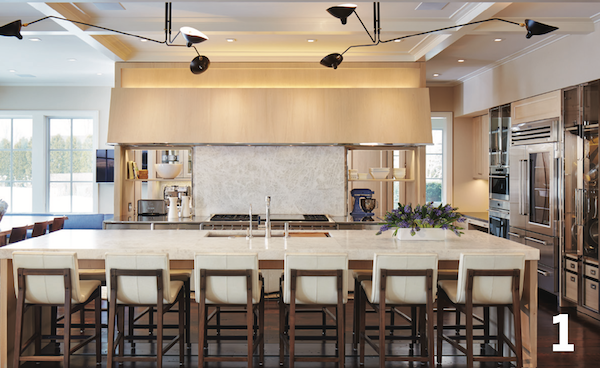
1. Two-for-one “Layered” Kitchens


Kitchen


Even before the pandemic, some homeowners with an open-plan layout found that increased exposure and family togetherness posed a downside in the kitchen work area: piles of dirty dishes, cluttered countertops, and other unsightly messes. Leave it to trendsetters to develop a solution for those with ample space and funds: two kitchens in one. Mick De Giulio of de Giulio Kitchen Design in Chicago calls it a “layered kitchen” with separate “work” and “living” zones. Cheryl Kees Clendenon of In Detail Interiors in Pensacola, Fla., refers to it as having a “prep and show kitchen.” In the work area, typically at the back and concealed by a door, wall, or hall, serious cooking and cleanup take place. The area may be part of a large laundry or utility room and might also be used by caterers (when entertaining returns with gusto), Clendenon says.


In contrast, the living or show kitchen at the front remains open, designed to display culinary creations in a clean, uncluttered way. It’s where a golden-brown turkey would come out of the oven before being carried to the back for carving. Some homeowners may also designate one kitchen for special-requirements cooking such as gluten-free prep, which a client of Clendenon’s requested. Or some may want to make space for a dedicated beverage center with a coffee station, refrigerated drawers, and a wine cooler to meet needs from morning to night, De Giulio says.


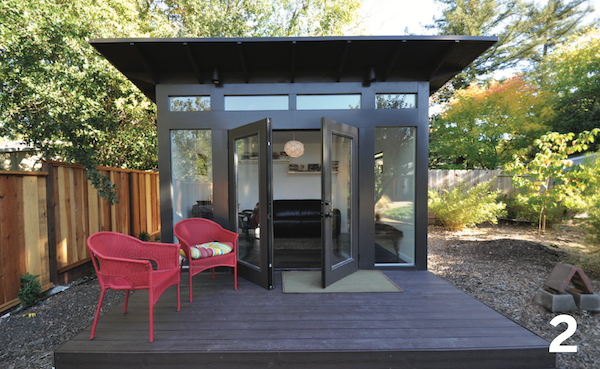
2. Flexible, Prefabricated Sheds


Shed


Sheds, once used primarily to store sports equipment and garden paraphernalia, have evolved into a common home addition. Some homeowners use them as overflow storage instead of paying for an expensive off-site facility. Others seek larger and better outfitted models as accessory dwelling units for people because more municipalities are approving ADUs. They’ve become dwellings for returning adult children and short- and long-term renters, quiet work-from-home quarters, and escapes for recouping sanity—hence the new moniker “the sanity shed.”


Rather than have an architect or contractor design and build a shed from scratch—which can be pricey and time-consuming and which often requires a building permit—homeowners can find more affordable, off-the-shelf options on the market, some of which can be customized. Boulder, Colo.–based Studio Shed has experienced explosive growth during the pandemic. The company offers prefabricated, sustainable designs that vary by size (from 64 to 256 square feet), color, door and window placement, finishes, and price ($11,000 and up). Because of the increase in gardening during the pandemic, the company offers its “Studio Sprout” greenhouse ($14,250), while customers’ most popular choice is a functional home office (about $25,000). Some municipalities looking to spur affordable housing in a shorter time frame offer preapproved plans for expanded sheds that can serve as modest dwellings, says architect Brian O’Looney of Torti Gallas + Partners in Washington, D.C., in his new book, Increments of Neighborhood.


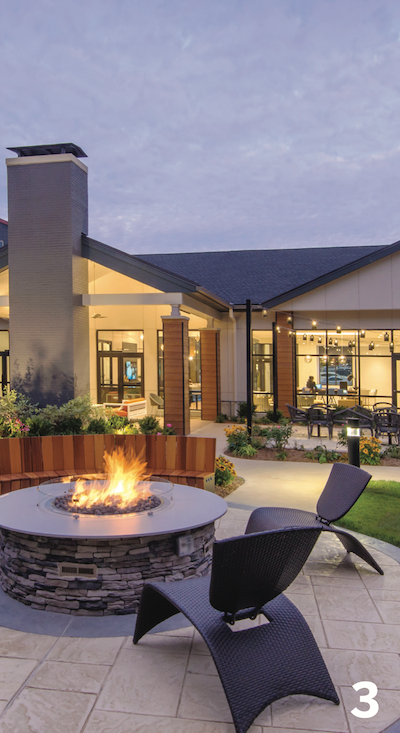
3. Outdoor Warming Features


Firepit


As temperatures fell, homeowners wanted to extend safe, outdoor socializing with family and friends in the time of COVID-19. “Everybody wanted to turn their backyard into an oasis to be able to eat safely and talk,” says landscape architect Clara Batchelor of CBA Landscape Architects in Cambridge, Mass. Many, including residents of multifamily buildings with shared outdoor space, want to keep doing so throughout winter. Two features that make fresh-air living in chilly evening weather pleasant are fire pits and patio heaters. They offer warmth from infrared electric heat, propane, or real wood-burning fires.


Local authorities are revising codes and ordinances to ease requirements pertaining to fire features, says architect Gary Kane with The Architectural Team in Chelsea, Mass. While fire pits have been popular for years, they’ve become more stylish, now available in different shapes, sizes, materials, weights, and prices. One design that grabbed attention early in the pandemic was Solo Stove’s portable “Bonfire” pit that uses logs but is smokeless. Hybrid models use gas and burning logs, says landscape architect Marc Nissim of Harmony Design in Westfield, N.J. Patio heaters are a newer home addition, inspired by restaurants using them to coax diners to eat outdoors. Using a variety of heating fuels, some are designed to stand alone and others mount on a wall or ceiling, says landscape designer Michael Glassman of Michael Glassman & Associates in Sacramento, Calif.


See more design trends for the year ahead.


Barbara Ballinger is a freelance writer and the author of several books on real estate, architecture, and remodeling, including The Kitchen Bible: Designing the Perfect Culinary Space (Images Publishing, 2014). Barbara’s most recent book is The Garden Bible: Designing Your Perfect Outdoor Space, co-authored with Michael Glassman (Images, 2015).


Tuesday, April 6, 2021

Companies Mull Pet-Friendly Office Policies to Entice Workers Back


Pets have become trusted allies—and coworkers of sorts—to a growing number of remote workers during the pandemic. Now companies who are welcoming employees back to the office are realizing they may also need to invite workers’ furry friends. And that means building operators may need to ease restrictions to allow for more pet-friendly office workspaces.


Fifty percent of C-suite executives say they are considering allowing employees to bring their pets to work when they return to the office, according to a survey from Canfield Pet Hospital and OnePoll. Fifty-nine percent of executives say they would allow “more flexibility” for employees to take care of their pets during the workday.


Such a policy may help entice more employees to return to the office after working from home for an extended period. Sixty-three percent of pet owners report anxiety over how their pets will cope with their post-pandemic work routine, according to a separate survey from Banfield Pet Hospital and OnePoll.


Executives also express an understanding and tolerance for pets, with 75% percent saying that being a pet owner has made them a better, more compassionate business leader. Other findings include:


  • Among executives who are crafting a specific pet policy in the workplace, 59% say their plans were motivated by employee requests.

  • Fifty-eight percent say they understand that staff members have gotten used to being around their pets all day.

  • Forty-two percent say a pet perk at work would entice employees to return to the office.


Research also has shown that dogs at work can make employees more collaborative and less stressed, Inc.com reports. “We’ve seen the human-animal bond only get stronger during the pandemic, and it’s no surprise that owners are thinking about how they can best be there for their pets when they start to spend more time outside of home,” says Brian Garish, president of Banfield Pet Hospital. “We believe we can advance human health through pet health, elevating societal well-being.”


Executives who already had a pet-friendly workplace policy before the pandemic say it prompted an increase in employee socializing, encouraged more employees to come to work, effected an uptick in employee productivity, and made employees more willing to stay at work later. However, those suffering from pet allergies or who do not have a fondness for pets may not be as happy about pet-friendly policies at work.


Source:


Monday, April 5, 2021

AFFORDABLE HOUSING IS UNDER ATTACK IN FLORIDA


This is your wake-up call, Florida, and we need your help to save affordable housing.


Last week, Senate President Wilton Simpson and Speaker of the House Chris Sprowls unveiled legislation, HB 5401 and SPB 2512, to permanently redirect two-thirds of the housing trust funds each year to sea level rise and wastewater infrastructure projects.


That’s some serious money that won’t be available to teachers, firefighters, nurses and other first responders for housing assistance. If this legislation passes, 66% of the $423 million available in the housing trust funds will go toward priorities other than housing.


This is unacceptable.


For nearly 30 years, the State Housing Initiative Program has received $2.6 billion from the housing trust funds that has helped 217,000 households with down payment and closing cost assistance, among other housing programs. A $423 million investment into housing programs next year would create 33,000 jobs and more than $4.9 billion in positive economic impact. That’s sound policy as we seek to restore our economy to a pre-pandemic state.


Monies for the housing trust funds come from a portion of the documentary stamp taxes charged on every real estate transaction. In 1992, Realtors advocated for this tax — 10 cents per $100 of value — on the condition that all monies collected went to housing programs.


But for years, that hasn’t happened.


During years of budget shortfalls, legislators swept more than $2.3 billion collected for the housing trust funds into general revenue. And now, when the people of Florida are experiencing pandemic-related challenges that include a critical shortage of affordable, attainable housing, there’s a plan to permanently reduce these vital “trust” funds to the lowest level of all.


The idea of permanently redirecting two-thirds of the housing trust funds is concerning during a pandemic. Housing has been our refuge, office, childcare and more. Essential workers, our first and last line of defense, would be left with one less option to secure housing, be it down payment or rental assistance.


Florida Realtors is the voice for millions of property owners who have paid into the housing trust funds. On their behalf, know that we appreciate the need to fund other priorities. But affordable housing IS a priority now more than ever in this post-pandemic economy. Affordability housing IS a priority for the elderly on fixed incomes and low-income families. Affordable housing IS a priority for teachers, firefighters, first responders and others who serve our communities. Our essential workers have guided us through the pandemic, and housing trust funds should be available to help them achieve the American dream of homeownership.


In 1992, lawmakers created a dedicated trust fund for housing purposes. HB 5401 and SPB 2512 would permanently change this dedicated funding source.


Visit https://affordablehousingfl.org/ TODAY to tell your elected leaders to honor the intended purpose of the trust funds and support affordable housing by voting NO on HB 5401 and SPB 2512!


Source: Florida Realtors®